For your first BJJ class, wear a fitted T-shirt or rash guard and athletic shorts or pants with no zippers, pockets or buttons. Take off jewelry, trim your nails and bring water. If it is a gi class, ask the gym whether you can borrow a gi or train in your workout clothes the first time.
Expect a warm-up, a few techniques taught step by step, practice with a partner and, at many gyms, some light live rolling at the end. Nobody expects you to know anything. Here is everything you need to walk in relaxed.
What to wear to your first BJJ class
For a gi class
The gi is the traditional uniform: a thick jacket, pants and a belt. You do not need to buy one before your first class. Many gyms let beginners borrow a gi or wear regular training clothes for a trial. Just ask when you book.
If you do wear your own clothes, pick:
- A fitted T-shirt or rash guard that will not ride up.
- Athletic shorts or sweatpants with no zippers, pockets, belts or metal parts.
For a no-gi class
No-gi means no uniform. Wear:
- A rash guard or a snug athletic shirt.
- Shorts without pockets or zippers, or spats (tight leggings), or both.
Loose clothes get caught on fingers and toes, so fitted is better. If you want to know more about how the two styles differ, read gi vs no-gi BJJ: what’s the difference?.
What not to wear
- Jewelry, including rings, earrings, watches and necklaces.
- Shoes on the mat. You train barefoot.
- Clothes with zippers, buttons or rivets, which can scratch you or your partner.
- Strong perfume or cologne. You will be very close to other people.
What to bring
- Water bottle. You will sweat more than you expect.
- Sandals or slides for walking off the mat to the bathroom. Shoes off the mat, bare feet on it, keeps the mats clean.
- A small towel.
- A mouthguard (optional, but many people like one).
- Hair ties if you have long hair.
Hygiene basics
Good hygiene is part of BJJ culture, and it protects everyone from skin infections.
- Trim your fingernails and toenails short before class.
- Arrive clean and wear fresh clothes every session.
- Cover any cuts with tape or a bandage.
- Shower soon after training, and wash your gear after every class.
- Stay home if you have a rash or are sick. Your teammates will thank you.
What happens in a beginner class
Every gym runs class a little differently, but most follow a similar pattern.
1. Arrive and meet the coach
Try to arrive 10 to 15 minutes early. You may need to fill out a waiver and change. Tell the coach it is your first class and mention any injuries.
2. Warm-up
Expect jogging, stretching and a few BJJ-specific movements like shrimping (a hip escape) and forward or backward rolls. Do what you can. Nobody is judging your warm-up.
3. Technique
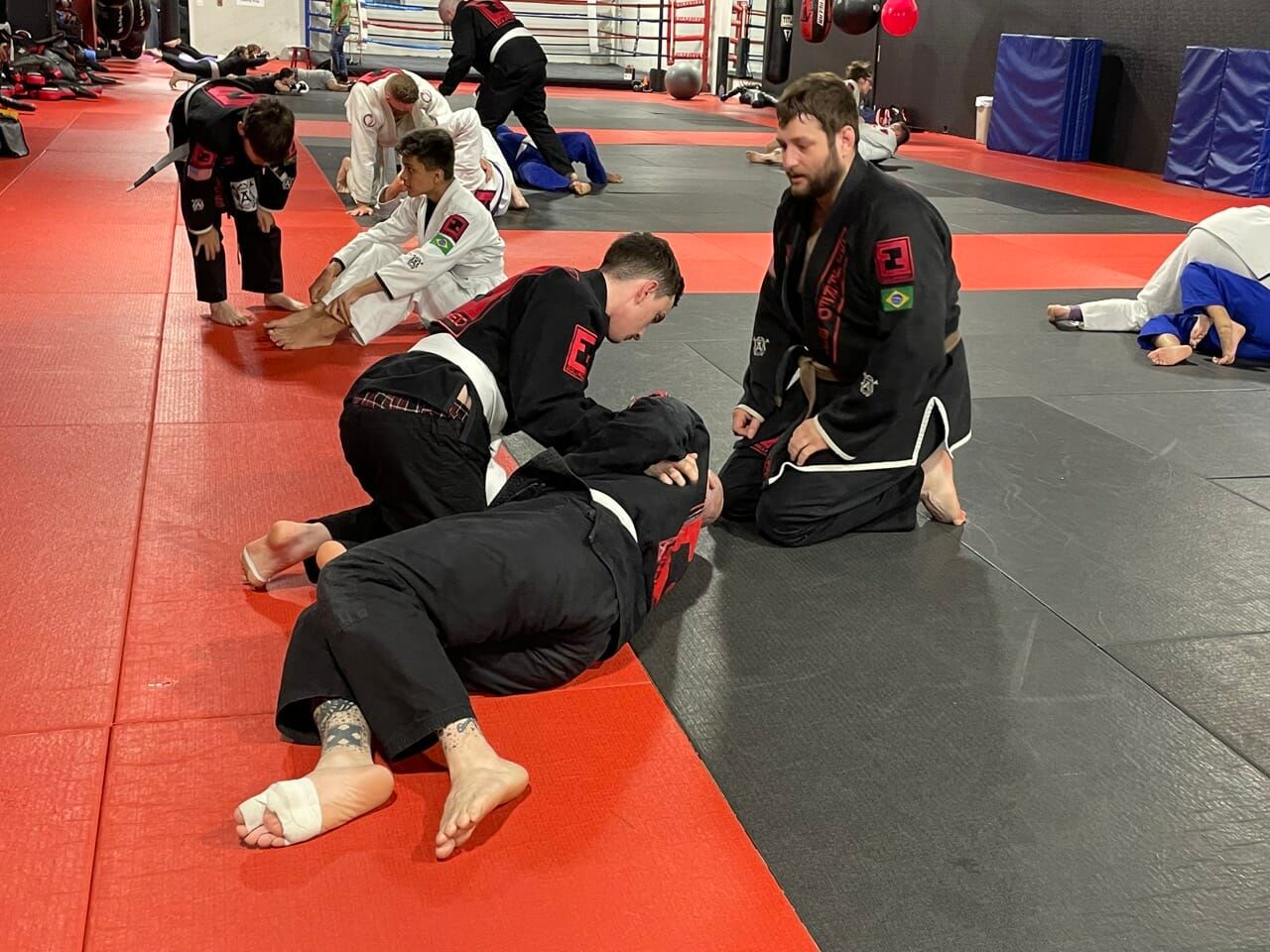
The coach shows a technique, often a position, an escape or a simple submission, and explains why it works. Then you pair up and practice it slowly, taking turns. This is where most of the learning happens.
4. Drilling and positional sparring
You may repeat the technique several times, then try it with a little resistance. Positional sparring starts from a set position, like one person in side control, with a simple goal for each partner.
5. Live rolling
At many gyms, class ends with live rolling, where both partners try to apply what they know. As a beginner, you may sit out, roll lightly with an experienced student, or roll with the coach. It is always fine to say you would rather watch this time.
How to tap, and why it matters
Tapping is how you say “stop” in BJJ. If you are caught in a choke or joint lock, tap your partner (or the mat) clearly two or three times, or say “tap.” Your partner lets go right away.
Tap early. There is no shame in it. Everyone taps, including black belts, many times a week. Tapping keeps you safe and lets you train again tomorrow.
Tips to feel comfortable from day one
- Go slow. Speed and strength are not the point. Technique is.
- Ask questions. Coaches and training partners like helping new people.
- Breathe. Holding your breath tires you out fast.
- Do not compare yourself to others. Everyone started as a white belt.
- Come back. The second and third classes are where things start to click.
Feeling nervous is completely normal. Many people put off their first class for months. Almost all of them wish they had started sooner.
Common beginner questions
Do I need to be in shape?
No. BJJ will get you in shape. Go at your own pace and rest when you need to.
Am I too old to start?
Probably not. Adults start in their 30s, 40s and 50s all the time. See benefits of jiu-jitsu for adults and self-defense for tips on training later in life.
Will I get hurt?
BJJ has risks like any sport, but beginner classes focus on control. Tapping early, rolling with sensible partners and listening to the coach keep risks low.
When do I get my first stripe?
It depends on the gym and how often you train. Read BJJ belt ranks explained to see how stripes and belts work.
Book your first class in Leominster
Squared’s Brazilian Jiu-Jitsu program is for ages 14 and up and welcomes complete beginners. The head coaches are Gabriel Gonzaga, a 5th-degree BJJ black belt and former UFC heavyweight title contender, and Luis Soto, a 6th-degree black belt in jiu-jitsu. If you are in Leominster, Fitchburg, Sterling or anywhere in central Massachusetts, book a free trial class. Tell us it is your first time, and we will take it from there.