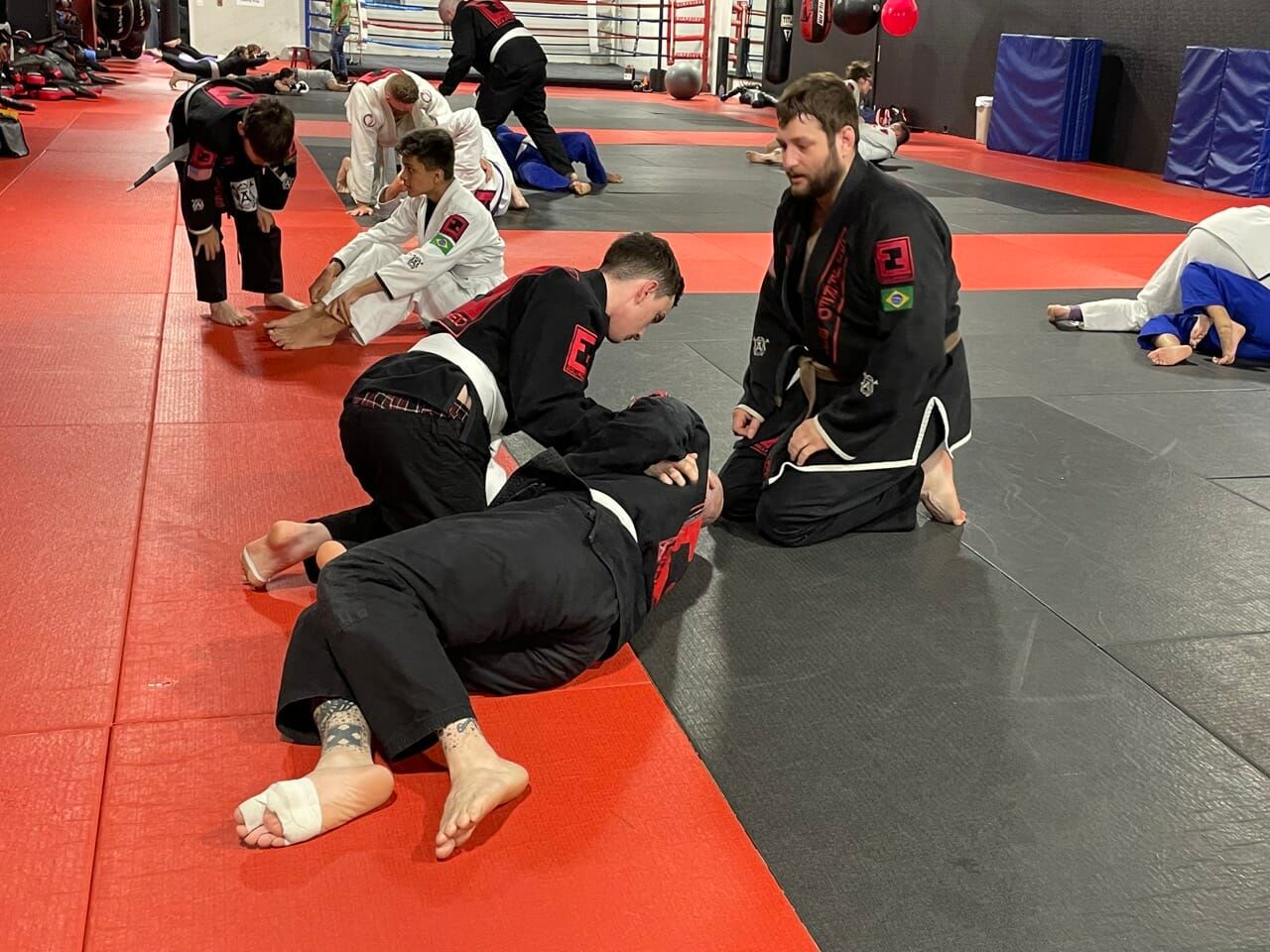
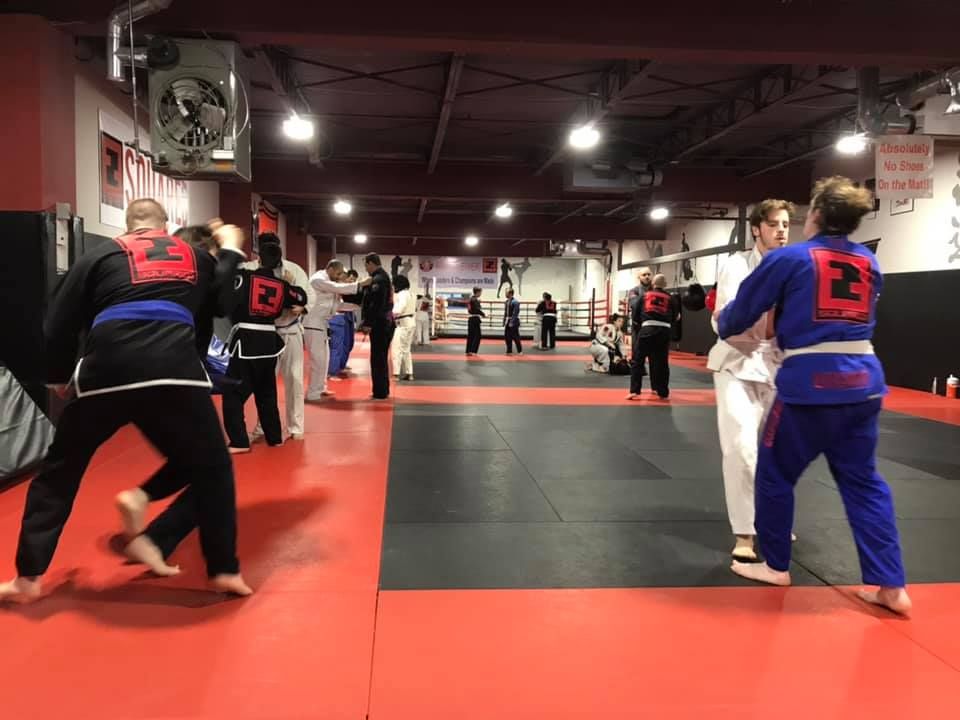
Judo and Brazilian Jiu-Jitsu (BJJ) come from the same roots, but they focus on different parts of a fight. Judo is mostly about throwing someone to the ground from standing. BJJ is mostly about what happens after you get there: controlling a person on the ground and finishing with a joint lock or choke.
Both are grappling arts, both are trained in a gi (kimono), and both work very well together. Here is how they compare, and how to pick one if you are just starting.
Where judo and BJJ come from
Judo was founded in Japan in 1882 by Jigoro Kano. He took older jujutsu styles, kept the techniques that could be practiced safely at full speed, and built a system around throwing, pinning and submissions. Judo became an Olympic sport in 1964.
In the early 1900s, a Japanese judoka named Mitsuyo Maeda traveled to Brazil and taught there. Members of the Gracie family and others learned from that tradition and developed it with a heavy focus on groundwork. That became Brazilian Jiu-Jitsu.
So BJJ is, in a real sense, a branch of judo that grew in its own direction.
The biggest difference: standing vs ground
Judo: the throw is the goal
In judo, a clean throw that lands your opponent largely on their back with speed and control scores ippon, which ends the match right away. Because of that, judo players spend most of their training on grip fighting, balance breaking and throws.
Judo does have groundwork, called newaza, including pins, chokes and armlocks. But in competition, the referee only gives players a short time on the ground before standing them back up if nothing is happening.
BJJ: the ground is where you win
In BJJ, a takedown scores points but does not end the match. Most of the action happens on the ground. Players score points for sweeps, passing the guard, mount and back control, and they win outright by submission.
BJJ players spend a lot of time fighting from their back, using the guard, a position where your legs control the other person. In judo, being on your back is usually a bad sign. In BJJ, it can be a strong position.
Rules at a glance
| Judo | BJJ | |
|---|---|---|
| Main goal | Throw the opponent cleanly | Control and submit on the ground |
| How a match ends early | Ippon (clean throw, pin or submission) | Submission |
| Time on the ground | Short, unless progress is made | Most of the match |
| Fighting from your back | Usually avoided | A core skill (the guard) |
| Leg locks | Not allowed | Some allowed, more at higher belts |
| Olympic sport | Yes | No |
Rule sets change over time and vary between organizations, so treat this as a general picture.
Training feel: what class is like
A judo class often feels more athletic and explosive. You will practice breakfalls (how to land safely) early on, then drill throws with a partner over and over before trying them in live practice called randori.
A BJJ class usually starts on the ground. You drill a position or technique, then do positional sparring or full rolls, where both people try to apply what they learned. The pace can be slower and more like a physical chess match.
Both arts let you practice at near full effort against a resisting partner. That live training is what makes them so effective compared with arts that rely only on forms or pre-arranged drills.
Which is better for self-defense?
Both are useful, for different reasons.
- Judo teaches you to stay on your feet, break someone’s balance and put them on the ground hard while you stay up. On concrete, a good throw is very effective.
- BJJ teaches you what to do if you end up on the ground, especially on your back under a bigger, stronger person. It also teaches control without striking, which is useful when you want to stop someone without hurting them badly.
The ideal is both: a few good takedowns plus a strong ground game. Many BJJ schools now teach judo throws and wrestling takedowns for exactly this reason. For more on how BJJ holds up outside the gym, see benefits of jiu-jitsu for adults and self-defense.
What about wrestling and MMA?
People often compare judo with wrestling too. Wrestling shares the focus on takedowns, but there is no gi, so grips are on the body, head and legs. Wrestlers are known for strong conditioning and pressure. Wrestling does not use submissions.
MMA combines striking with grappling. Successful MMA fighters usually train BJJ, wrestling and often judo, plus boxing and kickboxing. Gabriel Gonzaga, one of the head coaches at Squared, is a former UFC heavyweight title contender and a 5th-degree BJJ black belt, a good example of how grappling carries into MMA. If MMA interests you, the MMA program is for ages 16 and up.
Training both at once
You do not have to choose forever. Many grapplers cross-train. Judo makes your standing game sharper. BJJ makes you comfortable anywhere on the ground. The skills feed each other: judo grip fighting helps in gi BJJ, and BJJ ground skills make judo newaza far stronger.
At Squared, both head coaches have judo backgrounds. Gabriel Gonzaga holds a judo black belt alongside his BJJ rank. Luis Soto is a 6th-degree black belt in jiu-jitsu and a 4th-degree black belt in judo, as well as a Masters Judo National Champion who placed 5th at the World Masters (Judo).
How to choose if you are starting out
Ask yourself a few questions:
- Do you like the idea of throws and standing exchanges? Judo may suit you.
- Do you want to be calm and in control on the ground, even under someone bigger? BJJ is built for that.
- Do you want to compete in the Olympics one day? Only judo offers that route.
- Are you worried about hard falls? BJJ tends to be gentler on the body for beginners, since most rounds start on the knees or on the ground.
If you are not sure what to wear or how your first session will go, read your first BJJ class: what to wear and what to expect. And if you want to see whether gi or no-gi grappling fits you best, our guide to gi vs no-gi BJJ breaks it down.
Try BJJ in Leominster
Squared’s Brazilian Jiu-Jitsu program in Leominster is for ages 14 and up, and complete beginners are welcome. It is easy to reach from Fitchburg, Sterling, Lancaster and the rest of central Massachusetts. Your first class is free: book a free trial class and feel the difference for yourself.